
Understanding your Truss Rod
What is a truss rod and what does it do?
TECH TIPS
Understanding the Truss Rod: The Backbone of Your Electric Guitar’s Neck
When most players think about electric guitar setup, their minds jump straight to pickups, action, or maybe even fretwork. But hidden just beneath the fingerboard lies one of the most important—and often misunderstood—components of the entire instrument: the truss rod. This simple yet powerful piece of hardware plays a critical role in how your guitar feels, sounds, and performs over time. Whether you’re a seasoned tech or a curious player, understanding what the truss rod does and why it matters can transform the way you approach guitar maintenance.
What Exactly Is a Truss Rod?
A truss rod is a metal bar installed inside the neck of a guitar, running from the headstock toward the body. Its purpose is straightforward: to counteract the tension created by the strings. When a guitar is strung to pitch, the strings exert a significant amount of pull—often over 100 pounds of combined tension—trying to bend the neck forward. Without reinforcement, the neck would bow excessively, making the guitar nearly unplayable.
The truss rod provides the necessary counter‑force. By adjusting it, you can control the amount of relief (the slight forward curvature) in the neck. This relief is essential for comfortable playability and clean tone.
There are two main types of truss rods:
• Single‑action truss rods, which can only counteract forward bow by tightening.
• Dual‑action truss rods, which can correct both forward bow and back bow by tightening or loosening in either direction.
Most modern electric guitars use dual‑action rods, offering more flexibility and precision.
How a Truss Rod Works
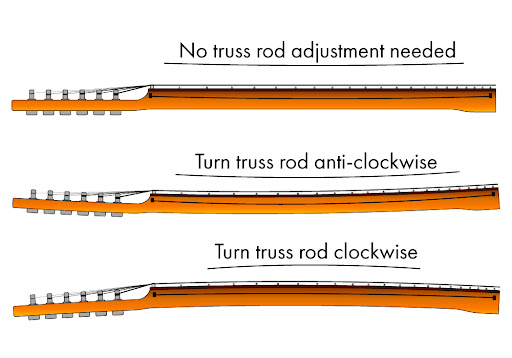
The operation of a truss rod is based on simple mechanical principles. When you turn the adjustment nut—usually located at the headstock or at the heel of the neck—you’re increasing or decreasing the rod’s tension.
Tightening the truss rod (clockwise):
• Increases tension
• Pulls the neck backward
• Reduces relief
• Lowers the action in the middle of the neck
Loosening the truss rod (counterclockwise):
• Decreases tension
• Allows the strings to pull the neck forward
• Increases relief
• Raises the action in the middle of the neck
Truss rod adjustments are subtle. A quarter‑turn can make a noticeable difference. Over‑tightening can damage the neck or the rod itself, which is why careful, incremental adjustments are always recommended.
Why Neck Relief Matters
The neck of a guitar is not meant to be perfectly straight. A slight forward bow—typically around .006" to .012" depending on the player’s preference—gives the strings room to vibrate naturally. Without this relief, the strings would buzz against the frets, especially during aggressive playing.
Relief also affects the feel of the guitar. Too much bow makes the action feel high and stiff, while too little can make the guitar feel choked or buzzy. The truss rod is the tool that allows you to dial in this balance.
Benefits of a Properly Adjusted Truss Rod
1. Improved Playability
Correct neck relief makes the guitar feel comfortable across the entire fretboard. Chords ring cleanly, bends feel smooth, and fast runs don’t get bogged down by high action.
2. Reduced Fret Buzz
Too little relief causes buzzing in the lower and middle frets. Too much relief can cause buzzing higher up the neck. Proper adjustment minimizes both issues.
3. Better Intonation Stability
While the truss rod doesn’t directly set intonation, neck relief affects string height, which affects how the guitar intonates. Proper relief helps keep intonation consistent.
4. Enhanced Tone
A guitar with proper relief resonates more freely. Excessive bow dampens sustain, while back‑bow can choke notes. Balanced relief allows the guitar to vibrate naturally.
5. Longer Fret Life
Improper relief can cause uneven fret wear. Maintaining correct relief distributes pressure more evenly, extending fret life.
6. Stability Through Seasonal Changes
Wood reacts to humidity and temperature. Regular truss rod adjustments help keep the guitar stable year‑round, especially in climates with dramatic seasonal swings.
Signs Your Truss Rod Needs Adjustment:
• Persistent fret buzz
• Sudden high action
• Dead notes or choking during bends
• Visible forward or backward bow
• Intonation drifting unexpectedly
Final Thoughts
The truss rod may be hidden from view, but it plays a central role in the performance and longevity of your electric guitar. Understanding how it works—and how to recognize when it needs adjustment—empowers players to keep their instruments in top shape.
A properly adjusted neck is the foundation of great tone, effortless playability, and long‑term stability. Treat the truss rod with respect, make adjustments carefully, and your guitar will reward you with years of reliable performance.

Stay up to date
© 2025. All rights reserved.